Blog
Offline Conversion Tracking for B2B SaaS: How It Works and Why the Default Setup Fails
Offline conversion tracking sends CRM pipeline back to ad platforms. Learn how the GCLID loop closes, what to set up first, and why 7-day attribution fails.
Map ten ad platforms to deal size, sales cycle and ICP, then allocate budget by cost-per-SQL ranges. B2B SaaS paid media framework with sourced benchmarks.
Offline conversion tracking sends CRM pipeline back to ad platforms. Learn how the GCLID loop closes, what to set up first, and why 7-day attribution fails.
Learn how to reduce wasted ad spend in B2B SaaS: causes, a waste rate formula, quartile benchmarks and a prioritised fix list that keeps total budget.

Why ad platform conversions and CRM pipeline never match in B2B SaaS: attribution windows, form fills that miss SQL, a GCLID audit and a fix sequence.
Request a quote and our experts will contact you within 24 hours with tailored solutions and pricing.
adsforb2bsaas.com
Last updated: Oct 20, 2026
By Ads for B2B SaaS Editorial Team | Last updated: October 13, 2026
B2B SaaS paid media budget allocation means assigning ad spend to channels based on annual contract value (ACV), sales cycle length, and cost-per-SQL benchmarks, not habit, percentage rules, or what a competitor appears to be running.
B2B SaaS companies should start with Google Ads for demand capture, add LinkedIn Ads when ACV is high enough to absorb a cost per SQL of $800 to $8,000 (GrowthSpree, L26, June 2026), and allocate budget by cost per SQL - the metric that correlates with pipeline at r = 0.71 (GrowthSpree, PD26, June 2026) - rather than by channel familiarity or percentage rules.
Most B2B SaaS marketing teams inherit a channel mix nobody designed. Google Ads was added because search made sense. LinkedIn Ads came next because someone at a conference said so. A month later it was paused. The pattern repeats with no principled basis. Meanwhile, the median B2B SaaS company wastes 34.0% of its Google Ads budget, roughly $255K per account per year, according to the 2026 B2B SaaS Google Ads Waste Report (GrowthSpree, 104 accounts, $78.0M in spend, June 2026). A poor channel map and an arbitrary budget split are the root cause.
This guide maps all ten ad platforms to deal size, sales cycle and ideal customer profile (ICP) size. It then gives a budget-allocation framework anchored to cost-per-SQL (sales-qualified lead) ranges by channel, with figures from sourced benchmarks. Every recommendation ties to a specific ACV tier or benchmark figure, not qualitative opinion.
Key Takeaways
- The ten B2B SaaS ad platforms split into demand-capture channels (Google Ads, Microsoft/Bing Ads, Capterra and G2) and demand-creation channels (LinkedIn Ads, Meta Ads, Reddit Ads, YouTube Ads, TikTok Ads, Programmatic, ChatGPT Ads). Start with capture.
- Median B2B SaaS cost per SQL on Google Ads is $800 to $2,500; LinkedIn Ads ranges from $800 to $8,000 by ACV tier (GrowthSpree, B26 and L26, 2026).
- Cost per SQL correlates with pipeline at r = 0.71; CTR correlates at r = 0.09 across 1,412 ad variants (GrowthSpree, PD26, June 2026). Budget decisions based on CTR or CPL are unreliable proxies for pipeline.
- 91% of audited B2B SaaS accounts had no Google click ID (GCLID)-to-CRM connection, meaning attribution was broken before any allocation decision was made (GrowthSpree, G26, June 2026).
- Add a second channel only after the first produces sales-qualified leads at a cost your ACV can sustain.
In this guide:
The ten ad platforms a B2B SaaS company should consider are Google Ads, LinkedIn Ads, Meta Ads, Microsoft/Bing Ads, YouTube Ads, Reddit Ads, TikTok Ads, Programmatic display, Capterra and G2 listing ads, and ChatGPT Ads. Not all ten belong in every plan. The right starting set depends on annual contract value, sales cycle length, and ideal customer profile size, because each platform carries a different cost-per-SQL range and reaches a different buying stage.

The ten channels divide into two categories.
Demand-capture channels are ad platforms that reach buyers already searching for a solution. They convert faster, but the audience is limited to whoever is actively in-market at a given moment.
Demand-creation channels are ad platforms that reach buyers before they search. They take longer to produce pipeline, but they reach a larger share of the total addressable market.
| Channel | Type | Best ACV fit | Primary targeting signal |
|---|---|---|---|
| Google Ads | Demand capture | Any ACV where buyers search | Keyword intent |
| Microsoft / Bing Ads | Demand capture | Any ACV; strong enterprise overlap | Keyword intent |
| Capterra and G2 | Demand capture | Any ACV where buyers compare vendors | Category listing |
| LinkedIn Ads | Demand creation | High ACV ($30K+) | Job title, seniority, company size |
| Meta Ads | Demand creation | Mid ACV ($5K to $30K) | Interest, lookalike, retargeting |
| YouTube Ads | Demand creation | Mid to high ACV | Topic, placement, retargeting |
| Reddit Ads | Demand creation | Low to mid ACV; technical ICP | Subreddit, interest |
| TikTok Ads | Demand creation | Lower ACV; younger buyer demographic | Interest, lookalike |
| Programmatic |
The starting rule: run a demand-capture channel first. If buyers are already searching for your solution category, capture that demand before attempting to create it. Google Ads belongs in the first plan for almost every B2B SaaS company with non-zero search volume for its category.
Add a second channel when the first produces sales-qualified leads at a cost your ACV can sustain, not before. Running two channels simultaneously before either is optimised splits learning, inflates waste, and makes it impossible to attribute SQL growth to a specific cause.
A practical threshold: if the trailing 90-day cost per SQL is within the median range for your vertical, shown in the cost-per-SQL table later in this guide, and the channel generates at least five to ten SQLs per month, it is ready to be scaled or complemented by a second channel.
Each B2B SaaS ad platform reaches a different buyer state, making deal size and ideal customer profile (ICP) size the most reliable filters for channel selection. Google Ads captures active search demand and suits any annual contract value (ACV) where buyers search for a solution category. LinkedIn Ads cost per SQL runs $800 to $8,000 by ACV tier (GrowthSpree, L26, June 2026), making it cost-effective only at higher deal sizes where that range can be absorbed.

Google Ads is the default starting channel for B2B SaaS. It captures buyers who have already identified they need a solution and are comparing options. The non-brand median cost per click is $8.50 to $14.00 (GrowthSpree, SaaS Google Ads Benchmarks 2026, April 2026), with wide variation by vertical: DevTools at $7.50 and Cybersecurity at $18.00 per click.
Google Ads works at almost any ACV because search intent is a self-selecting signal: the buyer is already in-market. The constraint is audience size. If fewer than a few hundred people search for your category each month, volume is too thin to scale.
Fit: Strong for ACV $5K and above where search volume exists.
LinkedIn Ads is the primary audience-building channel for B2B SaaS companies selling to specific job titles, seniority levels or company sizes. It is the only major ad platform where a buyer can be targeted by verified professional attribute, such as CRO, VP of Engineering or Head of Finance.
The cost is high. LinkedIn Ads cost per click for B2B SaaS runs $8 to $25 by vertical (GrowthSpree, L26, June 2026). LinkedIn cost per SQL runs $800 to $8,000 by ACV tier. At a low ACV, a cost per SQL of several thousand dollars is difficult to justify on unit economics alone. At a high ACV, that same cost per SQL can be absorbed comfortably.
Fit: Strong for ACV $30K and above. Requires careful audience exclusion to avoid the targeting over-inclusion that accounts for 67% of LinkedIn spend loss (GrowthSpree, L26, June 2026).
Sourced benchmark data (GrowthSpree, L26, June 2026-56 accounts, $9.4M spend): Decision-makers received only 33% of LinkedIn budget in audited accounts, against a 60%+ target. The remaining spend reached people outside the buying committee.
Microsoft / Bing Ads runs on the Bing, Yahoo and AOL networks and shares the search intent logic of Google Ads. CPCs tend to be lower, and the Bing audience skews toward enterprise buyers. For B2B SaaS companies selling to mid-market or enterprise buyers, Microsoft Ads is a cost-efficient complement once Google Ads is already running.
Fit: Good secondary channel for any ACV where Google Ads is running and enterprise audience overlap matters.
Meta Ads (Facebook and Instagram) reaches a broad audience with interest and behavioural targeting. It lacks the professional data LinkedIn Ads offers, but lookalike audiences built from SQL or closed-won lists can perform for retargeting and mid-funnel nurture.
Meta Ads tends to work better at lower ACVs, where the economics allow wider reach, or for retargeting campaigns where the audience is already warmed to the brand.
Fit: Mid ACV ($5K to $30K). Retargeting and warmed audiences first.
Reddit Ads suit B2B SaaS companies whose ideal customer profile is active on relevant subreddits. DevTools, MarTech, Cybersecurity and HR Tech buyers are well-represented on Reddit. Targeting by subreddit matches product relevance to context better than most platforms at the equivalent cost per click.
Results require patience. The median B2B SaaS sales cycle is 84 days (GrowthSpree, G26, June 2026), and a short measurement window will make Reddit Ads appear ineffective when the sales cycle may simply not have completed.
Fit: Low to mid ACV. Technical and practitioner-heavy ICPs. Requires at least a 90-day test window.
These four channels serve a demand-creation role and belong later in the channel plan for most B2B SaaS companies.
Capterra and G2 listing ads sit at a high-intent buying moment: a buyer is actively comparing vendors in a category. The cost model is typically pay-per-click or pay-per-lead within a software category. For B2B SaaS companies with strong review volume, these channels can produce sales-qualified leads at a predictable cost. See Capterra's software categories and G2's category listings for available categories.
Fit: Any ACV where buyers compare vendors on review sites before purchase.
Cost per SQL (sales-qualified lead) is the most reliable signal for channel efficiency in B2B SaaS paid media. The median B2B SaaS cost per SQL on Google Ads is $800 to $2,500, with DevTools at $650 and Cybersecurity at $3,500 (GrowthSpree, B26, April 2026). LinkedIn Ads cost per SQL runs $800 to $8,000 by ACV tier (GrowthSpree, L26, June 2026). These ranges are the only principled basis for deciding where the next dollar belongs.
| Channel | Median cost per SQL (B2B SaaS) | Source |
|---|---|---|
| Google Ads (non-brand, all verticals) | $800 to $2,500 | GrowthSpree, B26, April 2026 |
| Google Ads (DevTools) | ~$650 | GrowthSpree, B26, April 2026 |
| Google Ads (Cybersecurity) | ~$3,500 | GrowthSpree, B26, April 2026 |
| Google Ads (Performance Max, no offline conversions) | ~$2,140 | GrowthSpree, G26, June 2026 |
| Google Ads (Performance Max, with offline conversions) | ~$620 | GrowthSpree, G26, June 2026 |
| LinkedIn Ads (by ACV tier) | $800 to $8,000 | GrowthSpree, L26, June 2026 |
All figures are from convenience samples of B2B SaaS accounts and should be treated as directional benchmarks. The Google Ads sample covers 104 accounts and $78.0M in spend; the LinkedIn Ads sample covers 56 accounts and $9.4M in spend.
The gap between best and worst performers is large. On Google Ads, the best-quartile waste rate is 13.2% and the worst-quartile rate is 49.8% (GrowthSpree, G26, June 2026). That spread is not primarily about the channel. It is about settings: match types, campaign types, conversion tracking, and whether offline conversion data reaches the platform.
Sourced benchmark data (GrowthSpree, G26, June 2026-104 accounts, $78.0M spend): A 90-day fix applied to waste-causing settings moved average Google Ads waste from 34.0% to 11.0% and cut cost per SQL by 62%. The channel did not change. The configuration did.
The implication: a poorly configured Google Ads account at a $2,140 cost per SQL and a well-configured one at $620 are technically on the same channel.
A channel is viable when the economics close: cost per SQL multiplied by the number of SQLs needed to hit a revenue target stays within the budget available, at the ACV on offer.
Simple version: if ACV is $15,000 and the win rate is 25%, each closed-won deal requires four SQLs. At $2,500 per SQL, that is $10,000 in ad spend to generate one deal. At a 67% gross margin, one deal produces $10,050. The channel barely covers its own cost, and that assumes cost per SQL stays at the median.
At a higher ACV with the same win rate, the economics shift substantially. This is why LinkedIn Ads, with its higher cost per SQL, is defensible at high ACV and difficult at low ACV. The ACV tier boundaries in the budget table below are illustrative; actual thresholds depend on win rate and unit economics.
Click-through rate (CTR) and cost per lead (CPL) are the two metrics most commonly used to judge B2B SaaS ad performance, and both are poor predictors of pipeline. The Paid Ads Pipeline Disconnect study (GrowthSpree, PD26, June 2026) found CTR correlated with pipeline at r = 0.09 and CPL at r = 0.23. Cost per SQL correlated at r = 0.71. Budgets allocated by CTR or CPL are unreliable proxies for pipeline.
Sourced benchmark data (GrowthSpree, PD26, June 2026-1,412 ad variants, 96 accounts, $14.2M spend): CTR correlated with pipeline at r = 0.09. CPL correlated at r = 0.23. Cost per SQL correlated at r = 0.71. In 43% of A/B tests, the higher-CTR winner produced fewer or costlier sales-qualified leads.

CTR measures whether an ad attracted a click, not whether the person who clicked was a qualified buyer. In B2B SaaS, a high CTR often signals that an ad attracted a broad audience. A generic headline promising a free trial will out-click a specific headline targeting a Head of Engineering. But the generic headline converts to sales-qualified leads at a fraction of the rate.
In 43% of A/B tests in the study dataset, the higher-CTR winner produced fewer or costlier SQLs (GrowthSpree, PD26, June 2026). Using CTR to pick the winning ad means the wrong ad runs in nearly half of all tests.
Cost per lead (CPL) is measured at the platform and includes all form fills. The problem: 78% of form fills never reach SQL status (GrowthSpree, G26, June 2026). A campaign producing leads at a low CPL may be generating SQLs at several times that cost, or not generating them at all.
CPL also varies independently of SQL quality. A campaign targeting a broad audience will produce a low CPL and a low SQL rate simultaneously. The low CPL looks like efficiency when it is the opposite.
Re-score every ad, ad group and campaign by cost per SQL rather than CTR or CPL. Re-scoring and reallocating by cost per SQL improved cost per SQL by approximately 44% with no additional spend, across the same 1,412 ad variants (GrowthSpree, PD26, June 2026). The budget did not change. The allocation changed.
This requires capturing the Google click ID (GCLID) in the CRM at form submission and importing closed-won or SQL events back to Google Ads as offline conversions. That closed-loop connection is the mechanism that makes cost-per-SQL measurement possible at the campaign level.
B2B SaaS marketing budget allocation should be anchored to cost-per-SQL performance by channel, not percentage rules. For most companies below $50K annual contract value, Google Ads earns the largest share of starting budget, capturing in-market demand at a median non-brand cost per click of $8.50 to $14.00 (GrowthSpree, B26, April 2026). LinkedIn Ads becomes cost-justified when ACV is high enough to absorb its higher cost per SQL, which can reach $8,000 at the high-ACV end (GrowthSpree, L26, June 2026).
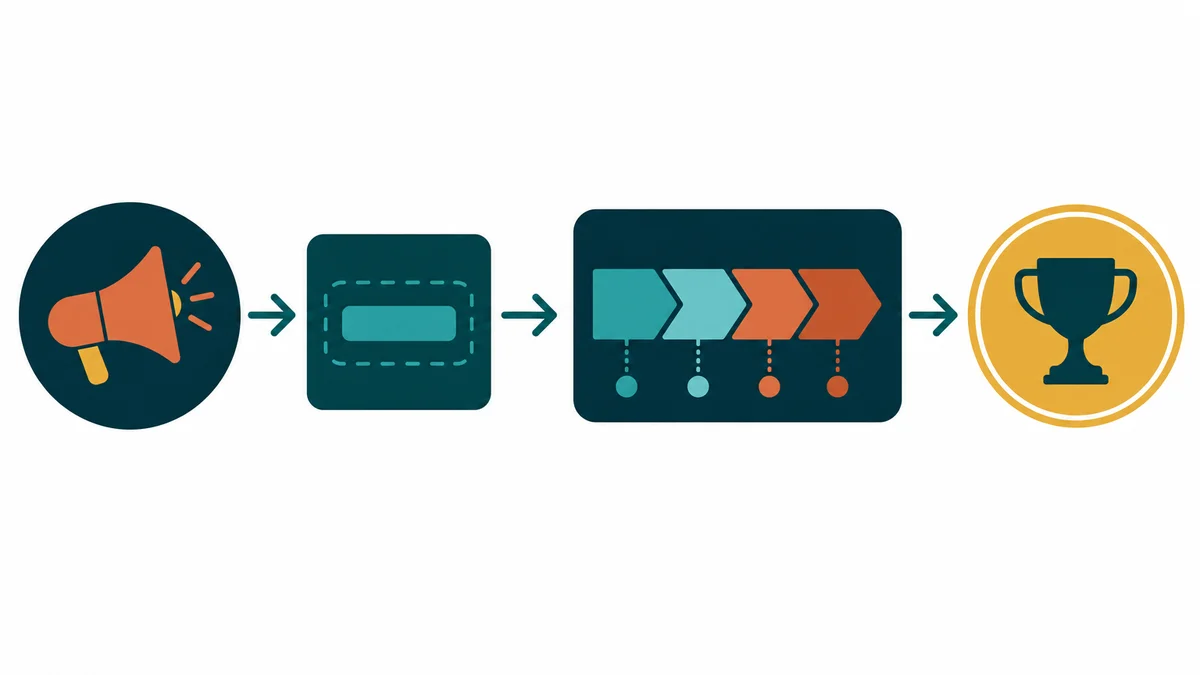
The table below uses ACV and sales cycle as the primary filters, with cost-per-SQL ranges from sourced benchmarks as the anchor. ACV tier boundaries are illustrative; actual thresholds depend on win rate and unit economics.
| ACV tier | Primary channel | Secondary channel | Channels to defer |
|---|---|---|---|
| Below $10K | Google Ads (non-brand search) | Reddit Ads (if technical ICP) | LinkedIn Ads, Programmatic |
| $10K to $30K | Google Ads | Meta Ads (retargeting) or Microsoft / Bing Ads | LinkedIn Ads, TikTok Ads |
| $30K to $60K | Google Ads | LinkedIn Ads (job title targeting) | Programmatic, TikTok Ads |
| High ACV ($60K+) | Google Ads and LinkedIn Ads | Programmatic (ABM) or YouTube Ads | TikTok Ads, Reddit Ads |
| Enterprise ACV | LinkedIn Ads and Programmatic | Google Ads (branded and competitor terms) | Reddit Ads, TikTok Ads |
These are starting points, not fixed allocations. The actual split shifts as cost-per-SQL data accumulates. A LinkedIn Ads campaign producing SQLs at $1,200 in a high-ACV business should receive more budget, not less, regardless of what the table suggests.
A meaningful single-channel test on Google Ads requires enough budget to generate at least 20 to 30 clicks per day on target keywords. At a median non-brand cost per click of $8.50 to $14.00 (GrowthSpree, B26, April 2026), that is roughly $5,100 to $12,600 per month at minimum. Below that level, there is too little data to distinguish a channel problem from a budget problem.
LinkedIn Ads requires a separate minimum. The platform's algorithm needs sustained budget to exit the learning phase. A fair LinkedIn Ads test for B2B SaaS is at least $3,000 to $5,000 per month, held for 60 to 90 days, with conversion tracking connected. Running LinkedIn Ads for three weeks at low spend and concluding it does not work is not a test; it is a guess.
Within Google Ads, the priority allocation for most B2B SaaS accounts is:
Within LinkedIn Ads, budget allocation between Sponsored Content, Thought Leader Ads and Message Ads should follow the same SQL-cost logic. If one format produces SQLs at half the cost of another, it earns the larger share.
Two campaign settings account for the majority of documented B2B SaaS paid media waste. On Google Ads, broad match without negative keywords and Performance Max without offline conversions together account for 56% of waste across 104 accounts and $78.0M in spend (GrowthSpree, G26, June 2026). On LinkedIn Ads, job function, seniority and company size targeting together account for 67% of waste across 56 accounts and $9.4M in spend (GrowthSpree, L26, June 2026).
Sourced benchmark data (GrowthSpree, G26, June 2026-104 accounts, $78.0M spend): The average Google Ads waste rate across audited B2B SaaS accounts was 34.0%, equivalent to roughly $255K per account per year. Best-quartile accounts wasted 13.2%; worst-quartile accounts wasted 49.8%.
Broad match without negative keywords is the single largest contributor to Google Ads waste in B2B SaaS. Broad match expands keyword targeting to include loosely related searches, which in B2B means ads can appear for consumer queries, job searches and competitor brand names. Without a negative keyword list in place, every irrelevant search costs real budget.
Performance Max (PMax) without offline conversions is the second culprit. Performance Max is a Google Ads campaign type that uses machine learning to serve ads across all Google inventory. It performs well when given quality conversion signals. Without sales-qualified lead or closed-won data sent back from the CRM as offline conversions, Performance Max optimises toward whatever event it can measure, typically form fills. Because 78% of form fills never reach SQL status (GrowthSpree, G26, June 2026), Performance Max running without this data optimises toward low-quality leads at high volume.
The cost is concrete: Performance Max cost per SQL with offline conversions is $620. Without them, it is $2,140 (GrowthSpree, G26, June 2026). The platform is the same. The conversion data is the difference.
LinkedIn's targeting defaults are broad. Job function targeting captures everyone in a function regardless of seniority or actual decision-making authority. Seniority targeting on LinkedIn is imprecise: the "Senior" label does not reliably map to a senior decision-maker. Company size targeting captures the full range of a band, including companies well outside the ideal customer profile.
Sourced benchmark data (GrowthSpree, L26, June 2026-56 accounts, $9.4M spend): Decision-makers received only 33% of LinkedIn budget in audited accounts, against a 60%+ target. Job function, seniority and company size targeting together accounted for 67% of waste.
The fix involves tighter audience construction: layering job title on top of seniority, explicitly excluding irrelevant functions, and using matched audiences (contact lists or account lists) to anchor the audience in known buyers rather than inferred ones.
Attribution is the mechanism that tells each ad platform which campaigns to scale and where to bid. When attribution is broken, budget allocation is based on false signals. The 2026 B2B SaaS Google Ads Waste Report (GrowthSpree, G26, June 2026) found 91% of audited accounts had no Google click ID (GCLID)-to-CRM connection, and 89% ran default 7-day click attribution, which captures only 5% to 15% of revenue against an 84-day median sales cycle.
Sourced benchmark data (GrowthSpree, G26, June 2026-104 accounts, $78.0M spend): 91% of audited B2B SaaS accounts had no GCLID-to-CRM connection. 89% ran default attribution before the audit. Default 7-day click attribution captures only 5% to 15% of revenue against an 84-day median sales cycle.
The default 7-day click attribution window closes before most B2B SaaS deals complete their first evaluation cycle. A buyer who clicks a Google Ad, attends a demo two weeks later, goes through three rounds of evaluation, and signs 90 days after the initial click is counted as zero revenue by a 7-day attribution model. The campaign that drove the SQL gets no credit.
The bidding algorithm, optimising toward the conversions it can see, concludes that the campaign is underperforming and either raises cost-per-acquisition targets or cuts budget. The pipeline impact is real but invisible to the platform.
GCLID (Google click ID) is the unique identifier Google Ads appends to every ad click. Capturing the GCLID in the CRM at the moment of form submission, then passing it back to Google Ads when that contact becomes an SQL or a closed-won deal, creates a closed-loop attribution model. With this connection in place, the platform learns which keywords, audiences and creatives produce pipeline. Without it, the platform optimises toward form fills, 78% of which never become SQLs (GrowthSpree, G26, June 2026).
B2B SaaS buying committees include 6 to 10 people (GrowthSpree, G26, June 2026), meaning a single deal involves multiple contacts, each potentially exposed to ads via different channels or touchpoints. Attribution that stops at the first form fill misses this complexity entirely.
When two channels run simultaneously, attribution becomes more complex. The same SQL may have been touched by a Google search ad, a LinkedIn Ads impression, and a Google retargeting ad before submitting a form. Default last-click attribution assigns all credit to the last channel, understating the contribution of earlier touchpoints.
For B2B SaaS, the most defensible multi-channel attribution approach uses position-based or data-driven attribution, with the CRM as the record of truth and offline conversions imported from each stage. This does not require expensive tooling. It requires GCLID capture in the CRM, a consistent contact field, and an offline conversion import connected to each ad platform.
The B2B SaaS paid media budget allocation framework in this guide is built on long sales cycles, small target audiences and CRM-based measurement. It does not apply to B2C or direct-to-consumer advertisers, ecommerce businesses, or local businesses. The cost-per-SQL benchmarks here assume deal structures with buying committees of 6 to 10 people and a median sales cycle of 84 days (GrowthSpree, G26, June 2026).
This framework also assumes a minimum budget of approximately $5,000 per month per channel to generate enough data for meaningful decisions. Below that threshold, statistical noise makes it difficult to distinguish a channel problem from a budget problem.
B2B SaaS marketing budget allocation should be anchored to cost-per-SQL performance by channel, not arbitrary percentages. Google Ads captures in-market demand first and earns the largest share of a starting budget for most companies. LinkedIn Ads suits higher-ACV deals where reaching a specific job title or buying committee justifies its cost per SQL, which ranges from $800 to $8,000 by ACV tier (GrowthSpree, L26, June 2026).
The median B2B SaaS cost per SQL on Google Ads is $800 to $2,500, based on the SaaS Google Ads Benchmarks 2026 report (GrowthSpree, April 2026). Verticals vary widely: DevTools averages $650 per SQL and Cybersecurity averages $3,500. Accounts running Performance Max with offline conversions achieved $620 per SQL versus $2,140 for accounts running without them, according to the 2026 B2B SaaS Google Ads Waste Report (GrowthSpree, 104 accounts, June 2026).
Google Ads is the most common starting point for B2B SaaS because it captures active in-market demand at a median non-brand cost per click of $8.50 to $14.00 (GrowthSpree, B26, April 2026). LinkedIn Ads makes sense as a second channel when the annual contract value is high enough to absorb a cost per SQL of $800 to $8,000 and the ideal customer profile is reachable by job title and seniority.
No. The Paid Ads Pipeline Disconnect study (GrowthSpree, 1,412 ad variants, 96 accounts, $14.2M spend, June 2026) found CTR correlated with pipeline at r = 0.09, which is close to no relationship. Cost per SQL correlated at r = 0.71. In 43% of A/B tests, the higher-CTR ad produced fewer or costlier sales-qualified leads. Optimising on CTR directs budget away from pipeline.
Cost per lead correlated with pipeline at r = 0.23 across 1,412 ad variants (GrowthSpree, PD26, June 2026). The core problem is that 78% of form fills never reach sales-qualified lead status, so a low CPL can conceal a very high cost per SQL. With a median B2B SaaS sales cycle of 84 days, optimising on CPL rewards volume at the top of the funnel rather than quality that closes.
The 2026 B2B SaaS Google Ads Waste Report (GrowthSpree, 104 accounts, $78.0M spend, June 2026) found an average waste rate of 34.0%, or roughly $255K per account per year. The best quartile wasted 13.2% and the worst wasted 49.8%. Broad match without negative keywords and Performance Max without offline conversions together account for 56% of documented waste.
Reddit Ads can work for B2B SaaS in verticals where practitioners are active on relevant subreddits, such as DevTools, MarTech and Cybersecurity. Success depends on matching the subreddit audience to the ideal customer profile, setting a long enough measurement window to account for the median 84-day B2B SaaS sales cycle (GrowthSpree, G26, June 2026), and not judging results on click-through rate alone.
The default 7-day click window captures only 5% to 15% of revenue for B2B SaaS companies with an 84-day median sales cycle, according to the 2026 B2B SaaS Google Ads Waste Report (GrowthSpree, G26, June 2026). The correct setup involves capturing the Google click ID in the CRM, importing closed-won and SQL data as offline conversions, and using a data-driven or longer attribution window that matches the actual sales cycle.
Choosing ad platforms and allocating budget across them is not a question of preference or channel familiarity. It is a question of ACV, sales cycle length, ICP size and cost-per-SQL capacity.
The framework here has four steps. First, map ACV to the channel set that can sustain the cost-per-SQL math. For most B2B SaaS companies, that means Google Ads as the primary demand-capture channel and LinkedIn Ads as the demand-creation channel when ACV clears $30K. Second, measure what matters: cost per SQL, not CTR or CPL. CTR correlates with pipeline at r = 0.09; cost per SQL correlates at r = 0.71 across 1,412 ad variants (GrowthSpree, PD26, June 2026). Third, fix attribution before adding channels. If 91% of audited accounts had no GCLID-to-CRM connection, attribution is almost certainly broken before any allocation decision is made (GrowthSpree, G26, June 2026). Fourth, run one channel well before running two channels poorly.
The median B2B SaaS company wastes 34.0% of its Google Ads budget. The best quartile wastes 13.2%. The gap between them is not which channel they chose. It is how precisely they configured it.
Ready to pressure-test your current channel mix? Meet with an expert for a free consultation. Bring your ad account questions and work through them with a paid media expert.
All data cited in this article comes from the following studies. Every figure states its sample size and study date. The data represents convenience samples of B2B SaaS accounts and should be treated as directional benchmarks, not universal averages.
© 2026 adsforb2bsaas.com All rights reserved.


| Demand creation |
| High ACV; ABM account lists |
| Account list, intent data |
| ChatGPT Ads | Demand creation / capture | Emerging; early test stage | Prompt context, topic |